- News
- entertainment
- hindi
- music
- Let’s converse in music
Trending
This story is from December 16, 2011
Let’s converse in music
Ustaad Zakir Hussain, who is slated to visit the city on December 17, says he is all set for a spontaneous interaction with his audience
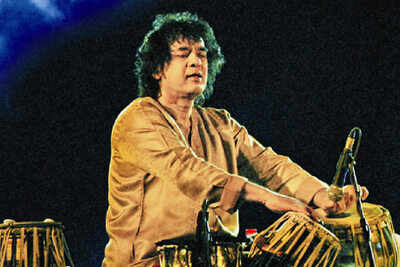
Ustaad Zakir Hussain, who is slated to visit the city on December 17, says he is all set for a spontaneous interaction with his audience
What do you have in store for the Hyderabadi audience as you perform at the Chowmahallah Palace tomorrow? If a musician can predict that, he will be God! With Indian music, especially, it’s different. It’s not like pop music where the songs are pre-recorded. When I perform on stage it is to basically project and express the emotions that I feel at that time. It is spontaneous. My music comes from the great masters who have passed it on and though it might have changed and shaped differently over the centuries, the essence is the same. Even if you ask me in what order I am going to perform, I cannot tell you. For me, a performance is a way to express my love, connection, affection and reverence to the music of my country. I hope it all comes through on stage. And the other most important thing is for the audience to get into the same wavelength and to establish that it takes 10-12 minutes on stage. The audience is just as much a part of my performance. Their response inspires me. As the musical conversation between us grows, the mood of the evening and the ambience adds to it and magic can be made!
At 60 you still exhibit the enthusiasm of a youngster who is beginning his career. What’s the secret? Now, you are making me feel old! A senior citizen huh!? But then, my enthusiasm comes from my connection with music — me and my instrument, me and my fellow artistes. For me, everyday is a new day. It’s very similar to turning on a news channel. For most part, it is pretty much the same stuff of day-to-day happenings that have a familiar ring, but then out of the 80 per cent, there will be 20 per cent that’s positive. It is the expectation of that 20 per cent that makes it fun. It is that anticipation of finding out something new that challenges me to go on.
Who is accompanying you on your Hyderabad tour? In the field of music, we had two major losses this year — one is Jagjit Singh and the other is Sarangi player, Ustaad Sultan Khan. It’s going to be an emotional moment for me as I share with the audience the loss of the great maestro and perform with his son, Sabir Khan — the legacy that he has left behind. This is the first time we will both be performing on stage. This is going to be a homage to someone who had been my colleague and companion for 25 years.
The guru-shishya tradition is a sacred thing in India. Whom are you training to take on the mantle? I was a senior student of my father and there are many students of his who have done very well all over the world. I am their senior guru bhai (he reels out a long list of names). Today, the tabla is enjoying great success. There is an incredibly deep bench strength. It is no more a closed gharana, it has opened itself up for change.
What do you have in store for the Hyderabadi audience as you perform at the Chowmahallah Palace tomorrow? If a musician can predict that, he will be God! With Indian music, especially, it’s different. It’s not like pop music where the songs are pre-recorded.
At 60 you still exhibit the enthusiasm of a youngster who is beginning his career. What’s the secret? Now, you are making me feel old! A senior citizen huh!? But then, my enthusiasm comes from my connection with music — me and my instrument, me and my fellow artistes. For me, everyday is a new day. It’s very similar to turning on a news channel. For most part, it is pretty much the same stuff of day-to-day happenings that have a familiar ring, but then out of the 80 per cent, there will be 20 per cent that’s positive. It is the expectation of that 20 per cent that makes it fun. It is that anticipation of finding out something new that challenges me to go on.
Who is accompanying you on your Hyderabad tour? In the field of music, we had two major losses this year — one is Jagjit Singh and the other is Sarangi player, Ustaad Sultan Khan. It’s going to be an emotional moment for me as I share with the audience the loss of the great maestro and perform with his son, Sabir Khan — the legacy that he has left behind. This is the first time we will both be performing on stage. This is going to be a homage to someone who had been my colleague and companion for 25 years.
Can you tell us about your upcoming US-Canada tour in March and April 2012? This is something that I do every year. The tour basically showcases the masters of percussion traditions rarely heard on stage in India and abroad. In India, we have 200 different drumming traditions and tabla is a small part of it. I started these tours to give onstage visibility to drummers from remote parts of India. The tour goes on throughout the year. It starts off in March-April in the US and Canada and moves on to Europe in summer and in fall, we perform in places like Australia, New Zealand and South East Asia. The coordination takes a few years as I get them to perform at small concerts in Mumbai and then I interact with them to figure out which combination works best.
The guru-shishya tradition is a sacred thing in India. Whom are you training to take on the mantle? I was a senior student of my father and there are many students of his who have done very well all over the world. I am their senior guru bhai (he reels out a long list of names). Today, the tabla is enjoying great success. There is an incredibly deep bench strength. It is no more a closed gharana, it has opened itself up for change.
End of Article
FOLLOW US ON SOCIAL MEDIA









Photostories
entertainment videos
Featured In Movies

Popular Categories
Entertainment NewsBollywood NewsTollywood NewsKollywood NewsMollywood NewsMovie ReviewsLatest Hindi MoviesLatest Tamil MoviesMX PlayerParenting TipsHome RemediesWeight LossBeauty TipsParenting TipsHindi VideosHindi Video SongsBhojpuri Music VideosLatest Telugu MoviesBhojpuri Music VideoHindi TV News
Trending in Entertainment
Latest MoviesBollywood MoviesHollywood MoviesTamil Movies 2024Telugu Movies 2024Malayalam Movies 2024Kannada Movies 2024Marathi Movies 2024Bengali Movies 2024Top Rated Movies 2024Best Hindi MoviesBest English MoviesBest Telugu MoviesBest Tamil MoviesBest Malayalam MoviesBest Kannada MoviesBest Bengali MoviesUpcoming Hindi MoviesBest Movies Of All TimeBest Hindi Movies of All Time
Trending in Etimes
PM Modi’s birthday through the years: From slicing 73-kg laddoo cake to Cheetah Project and Vishwakarma YojanaHoroscope TodayNumerology Predictions TodayElla EmhoffDonald Trump AssassinationKaren DunnJose LopezKristina JoksimovicJoe WilsonTrump Eating The Dogs SongGermany NewsKamala HarrisPrince HarryBelly Fat LossDiabetes RiskFull Moon in September 2024Relationship TipsSean DiddyMiley CyrusDave Bautista
Trending in TV
Trending in Lifestyle
Trending in Regional
Movie Reviews
Berlin ReviewThe Buckingham Murders ReviewSpeak No Evil ReviewVisfot ReviewThalapathy Is The G.O.A.T ReviewRebel Ridge ReviewDetective Conan vs. Kid the Phantom Thief ReviewBeetlejuice Beetlejuice ReviewPad Gaye Pange ReviewA Wedding Story ReviewThe Diary Of West Bengal ReviewTikdam ReviewKinds Of Kindness ReviewAfraid Review
Upcoming Hindi Movies
Upcoming Regional Movies
Latest News
Pankaj Kapur is proud of son Shahid Kapoor’s film choices, calls him ‘the finest actor in the country’Mukhtar Ansari died of heart attack, not poisoning: UP's Banda district magistrate's report4 types of tea to improve gut health and ease digestive issuesMemeFi daily codes for 17 September 2024: Boost your earnings with daily codes and know how to maximizeKhatron Ke Khiladi 14: Shalin Bhanot hosts a fun party for his co-contestants Krishna Shroff, Abhishek Kumar, KaranVeer Mehra and othersDecoding how log analytics systems are enabling brands to derive maximum value from dataSebi U-turn: Pulls note blaming 'external elements' for staff stirAnother Mpox suspected case in India: Man showing symptoms admitted to hospitalTaurus, Daily Horoscope Today, September 17, 2024: Anxiety and stress diminishLiza Colon becomes 1st Latina to win Best Supporting Emmy AwardSelena Gomez recreates practiced applause she learnt from TV show Friends after losing at Emmys 2024Former WWE superstar is no longer listed on their internal rostersBeyond Paychecks: Job satisfaction, work-life balance more important than salary for Gen Z workforceThrowback: When Sunita Ahuja showered love on husband Govinda, 'A superb son, brother, and a very good father...'‘You is sleep or you can sleep’: Students prank Benglauru’s ‘pookie professor’ in viral videoHow ‘Oxford returnee’ Atishi became chief minister of DelhiWhy more couples aged 50 or older are getting divorcedThese are the most toxic fresh produce of 2024
Other Group Sites -
ETimes is an Entertainment, TV & Lifestyle industrys promotional website and carries advertorials and native advertising.